
The Best Time to Pour Concrete in Fort Pierce, Florida
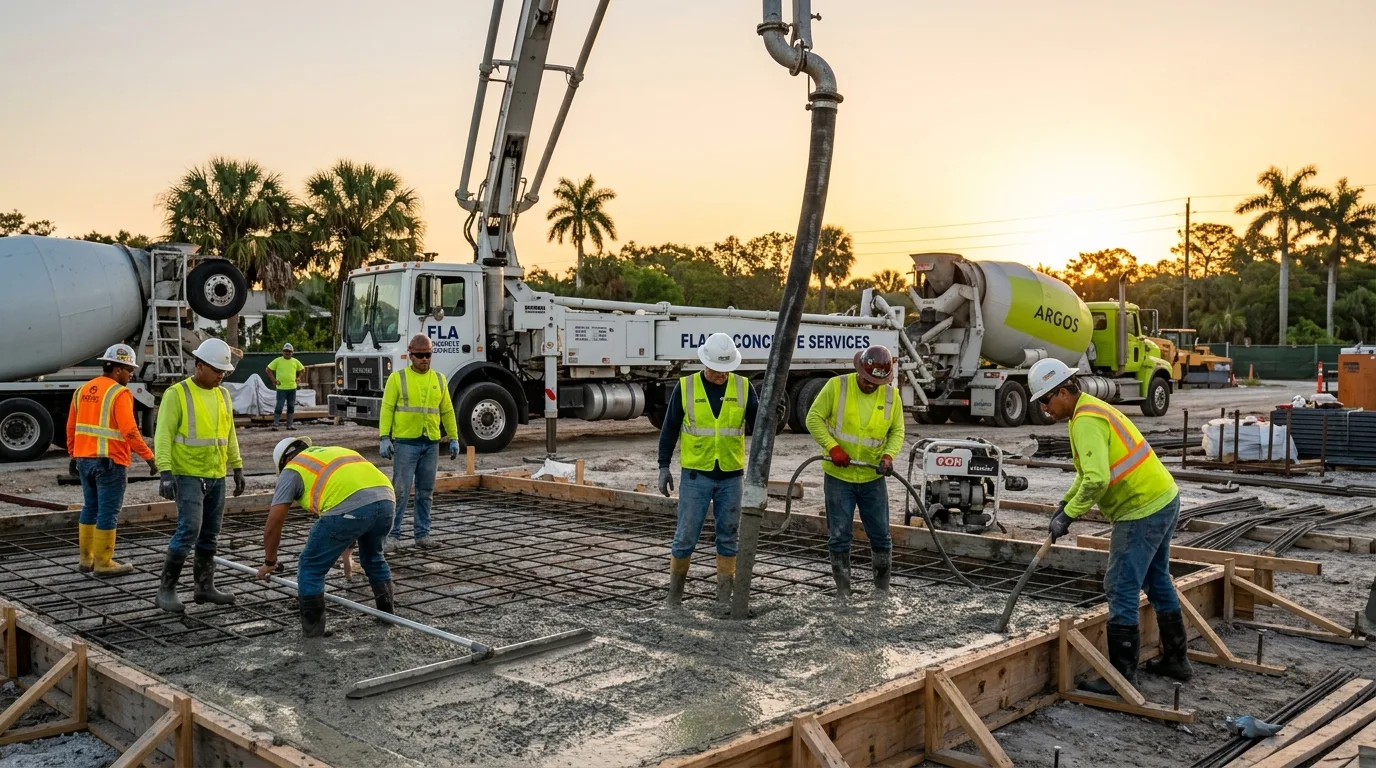
Fort Pierce averages 51.17 inches of rain annually — with nearly 7 inches falling in August alone. For homeowners planning concrete driveways, patios, or foundations, that rainfall pattern isn’t just a weather note. It’s one of the two most important factors in determining when your project should be scheduled.
In this post, we cover the best and worst months for concrete work in Fort Pierce, why temperature and humidity matter for curing, how to plan around the rainy season and hurricane season, and what contractors can do when a summer pour is unavoidable.
Schedule Your Fort Pierce Concrete Project Today
We plan every project around optimal scheduling windows for Fort Pierce's climate. Call (888) 376-0955 for a free estimate.
Why Fort Pierce’s Climate Creates a Strong Seasonal Window
Fort Pierce’s climate divides clearly into two seasons for concrete scheduling purposes. The dry season — October through May — offers temperatures between 55–85°F, lower relative humidity, and far fewer weather disruptions. The rainy season — June through September — brings daily afternoon thunderstorms, humidity consistently above 80%, hurricane season risk from June 1 through November 30, and August peak precipitation that makes consecutive dry days rare.
The temperature and humidity difference between these seasons isn’t cosmetic. Concrete curing is a chemical process — the hydration of cement — that is sensitive to both heat and moisture. Too much heat drives moisture out of the slab before the chemical reaction completes, creating a weaker surface that’s prone to surface cracking and scaling. Too much rain on fresh concrete dilutes the water-cement ratio, reducing strength and causing surface damage.
In the Lincoln Park neighborhood and waterfront areas near the Fort Pierce Inlet State Park, concrete work in August means managing afternoon thunderstorms that can arrive with little warning and last 30–60 minutes — enough to damage a freshly poured slab that hasn’t set sufficiently.
Best Months for Concrete Work in Fort Pierce
October–December: The best months for large concrete pours in Fort Pierce. Temperatures drop from summer highs into the 70–80°F range, humidity decreases after the rainy season ends, and the risk of afternoon thunderstorms drops dramatically. Concrete cures cleanly and completely during this window. Book early — demand is highest in fall and early winter.
January–March: Ideal for decorative concrete work — stamped concrete patios, stamped pool decks, and color-work driveways. The 55–75°F temperature range gives contractors the longest working window for stamping and finishing before the concrete sets, which is critical for getting patterns right. Homeowners who want a finished patio ready for spring and summer entertaining schedule in this window.
April–May: Still good for concrete work, though temperatures begin climbing. Projects should be scheduled for early morning starts to maximize the cool portion of the day before afternoon heat sets in. The rainy season hasn’t started yet, but isolated afternoon showers become more common from April on.
Months to Be Cautious About
June–September (Rainy Season): Fort Pierce’s rainy season makes concrete scheduling unpredictable. Daily afternoon thunderstorms mean contractors must be prepared to cover and protect fresh pours on short notice. Projects can be done in this window — contractors use curing compounds, plastic sheeting, and weather monitoring to manage risk — but scheduling becomes more complex and may require flexibility around pour days.
June–November (Hurricane Season): Fort Pierce’s location on the Treasure Coast puts it within the projected path of Atlantic hurricanes during the June–November season, with peak activity in August and September. Major storm preparation can disrupt project timelines unexpectedly. Large projects like foundations are better scheduled outside this window if the project timeline allows.
July–August (Peak Heat): Average high temperatures in Fort Pierce exceed 90°F in July and August. Concrete poured in this heat cures faster than optimal — the surface sets while the interior is still gaining strength, increasing surface crack risk. We mitigate this with shade, wind breaks, wet curing, and early morning pour scheduling, but these measures add cost and coordination complexity.
Planning a Concrete Project in Fort Pierce?
We'll help you find the optimal scheduling window for your project. Free estimate available now — call (888) 376-0955.
How Fort Pierce Contractors Manage Summer Pours
When project schedules demand summer concrete work, experienced Fort Pierce contractors use several techniques to compensate for the heat and humidity:
- Early morning pour scheduling: Starting at 6–7 AM gives the concrete 4–5 hours of cooler temperatures before afternoon heat peaks
- Ice-cooled water or chilled water in the mix: Reduces the concrete’s initial temperature, extending the working window
- Curing compounds: Spray-applied immediately after finishing to lock in moisture and slow the curing rate
- Shade structures: Temporary shade over freshly poured slabs near properties in Lakewood Park and Indian River Estates during peak summer heat
- Weather monitoring: Contractors watch radar closely and are prepared to cover freshly placed concrete if afternoon thunderstorms develop
These measures work well for driveways, patios, and smaller slabs. Large foundation pours benefit most from dry season scheduling when these complications can be avoided entirely.
Concrete Sealing: Timing Matters Too
Concrete sealing — the maintenance step that extends surface life in Fort Pierce’s UV-heavy climate — should also be timed to the dry season. A sealer applied just before Fort Pierce’s rainy season begins in June can trap surface moisture if the concrete isn’t fully dry at application time. The best sealing window in Fort Pierce is October–April, when lower humidity and dry conditions allow the sealer to penetrate and cure properly before the next rainy season arrives.
For maintenance scheduling, see our post on concrete driveway maintenance in Florida for a full care calendar.
Frequently Asked Questions
Can concrete be poured in the rain in Fort Pierce?
No — rain on freshly poured concrete before it sets significantly damages the surface. Water dilutes the cement paste at the surface, reducing strength and causing scaling and pitting that can’t be repaired without resurfacing. Fort Pierce contractors monitor radar closely and will reschedule a pour if significant rain is forecast within 6 hours of planned completion.
Is winter concrete work lower quality in Fort Pierce?
No — winter in Fort Pierce is actually the ideal time for concrete. Temperatures between 55–75°F are close to the laboratory optimal for concrete curing. Unlike northern states where freeze-thaw cycles are a concern, Fort Pierce’s winters are mild enough that freezing temperatures are extremely rare (record low 19°F), and typical winter temps are well above freezing throughout the curing period.
How far in advance should I schedule concrete work in Fort Pierce?
For dry season projects (October–April), book 4–6 weeks in advance — this is the busiest season. The permit application alone takes 30 days, so starting the permitting process as soon as you decide to move forward is the right call. Summer projects (May–September) have more scheduling flexibility but require weather window management.
Ready to Plan Your Fort Pierce Concrete Project?
Free estimates available now. We'll help you find the best scheduling window for your specific project. Call (888) 376-0955.
Related: