
6 Signs Your Fort Pierce Home Needs Foundation Repair
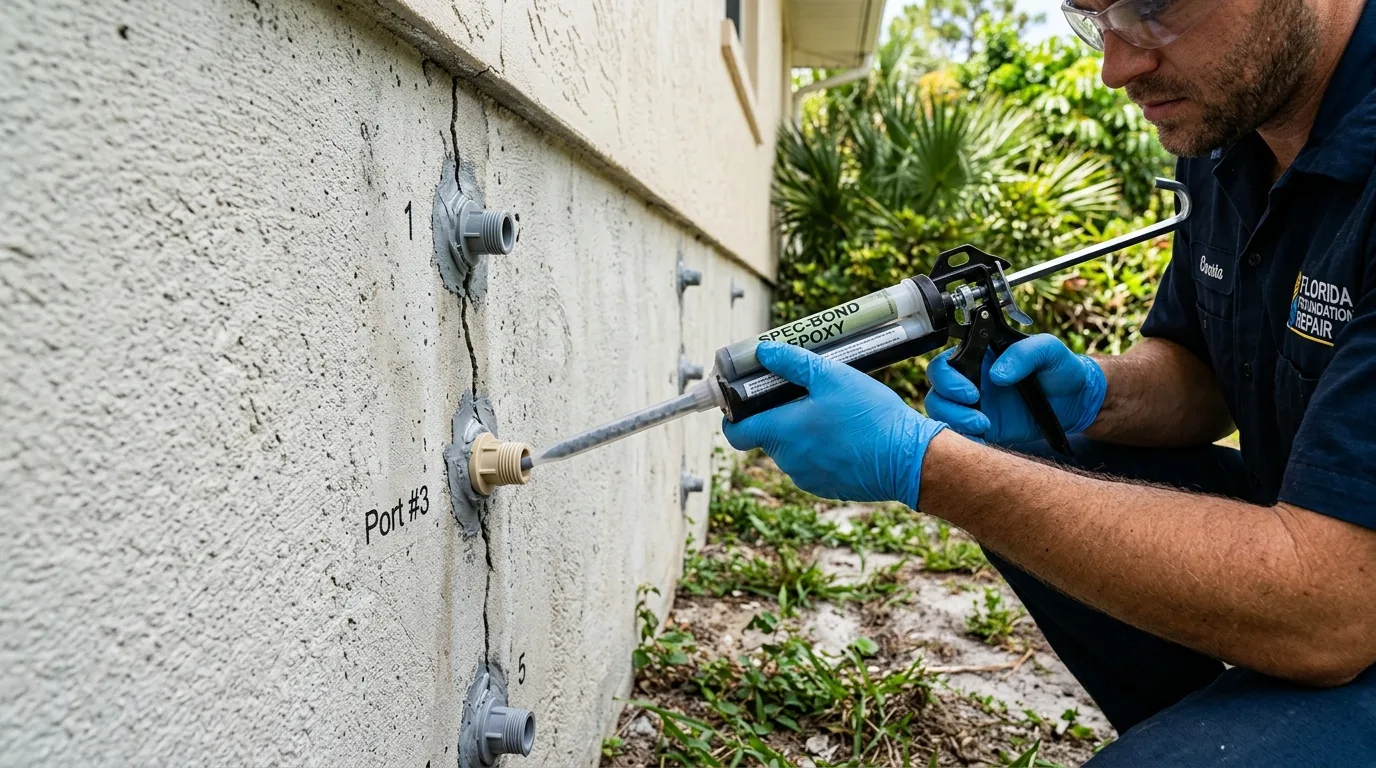
Most Fort Pierce homeowners don’t think about their foundation until something goes obviously wrong — a crack in the wall, a door that won’t close, a visible tilt in the floor. By the time those signs appear, the underlying cause has usually been progressing for months or years. Fort Pierce’s St. Lucie series sandy soils mean foundation movement can develop gradually and silently, well before anything dramatic happens.
Knowing these six warning signs early can save Fort Pierce homeowners thousands of dollars by catching problems when repair is still an option — before replacement becomes the only answer.
Foundation Repair Concerns in Fort Pierce?
Get a free foundation assessment from Fort Pierce Concrete Contractor. Honest evaluation, no pressure. Call (888) 376-0955.
Why Fort Pierce’s Soils Create Foundation Risk
Before covering the warning signs, understanding the cause helps. Fort Pierce is built on St. Lucie series Quartzipsamment soils — excessively drained, almost entirely sandy, with clay content below 5%. These soils have almost no natural cohesion. Bearing capacity in these soils is entirely dependent on compaction quality at construction time.
When a foundation is built over adequately compacted sandy subgrade, it’s stable for the life of the structure. When compaction was insufficient — or when something disrupts the soil equilibrium years later, like prolonged drought followed by saturating rainfall — the sand redistributes under load. The result is differential settlement: one part of the foundation settles faster than another, and the structure begins to rack.
Saint Lucie County’s rainy season delivers 25+ inches of rain in four months. After a wet season saturates the sandy subgrade, dry season can cause the same soil to compact differently as it dries. This cycle stresses foundations annually in areas like the Lincoln Park neighborhood and throughout older sections of Fort Pierce.
Sign 1: Interior Wall Cracks — Especially Diagonal Ones
Hairline horizontal cracks are often shrinkage cracks that are cosmetic. Diagonal cracks — 45-degree angle cracks running from the corner of windows or doors down toward the floor — are the signature of differential settlement. The crack forms because one corner of the foundation has moved relative to the adjacent section, putting the wall into a racking stress state.
In Fort Pierce homes, diagonal cracks that appear or widen after significant rainfall changes — a very wet season followed by extended drought — are particularly worth investigating. The timing correlates with soil moisture changes that affect bearing capacity under Fort Pierce’s sandy foundation soils.
Sign 2: Doors and Windows That Stick or Won’t Close
When a foundation settles differentially, the door and window frames shift out of square. The door or window still fits the opening, but the frame has racked enough that the door binds on the top or side when it closes. This is one of the earliest and most reliable indicators of foundation movement because it appears before visible cracking in many cases.
A single sticky door after a very dry or very wet season can be normal wood movement. Multiple doors and windows that are suddenly difficult to operate — particularly if they were fine previously — suggests the structural frame is moving, which almost always traces back to the foundation.
Sign 3: Gaps Between the Foundation and the Structure Above
A visible gap between the top of the foundation wall and the bottom of the framing above it indicates the structure has lifted away from the foundation or the foundation has settled away from the structure. Either scenario is serious. In Fort Pierce, this type of separation can indicate that the original anchor bolt connection between the slab and the wall framing has been compromised by settlement — a structural concern, not just cosmetic.
Is Your Fort Pierce Home Showing Foundation Warning Signs?
A free assessment from Fort Pierce Concrete Contractor can tell you what you're dealing with. Call (888) 376-0955.
Sign 4: Visible Slab Tilting or Uneven Floors
In slab-on-grade construction — the dominant foundation type throughout Fort Pierce and Saint Lucie County — uneven floors are a direct expression of what the slab beneath them is doing. If you place a marble on the floor and it consistently rolls toward one wall, or if furniture that used to sit flat now wobbles, the slab may have tilted from differential settlement.
This is measurable: a legitimate foundation contractor will use a level on multiple points across the floor to quantify the amount of settlement and identify the direction of movement. In Fort Pierce homes where settlement is caused by loose sandy subgrade, the movement pattern usually shows the perimeter settling relative to interior points — or one corner settling faster than the rest.
Sign 5: Cracks in Exterior Concrete Steps or the Foundation Itself
Cracks in the exterior concrete steps, garage floor, or visible foundation wall that weren’t there previously are significant. These elements are connected to or immediately adjacent to the foundation, and cracking in them often reflects the same soil movement affecting the main structure.
Fort Pierce homeowners should distinguish between the typical surface shrinkage cracks that appear on concrete within the first year after placement (fine, mostly surface-level, distributed evenly) and cracks that appear years after construction, run deep through the concrete, and follow directional patterns consistent with soil movement.
Sign 6: Efflorescence (White Deposits) Along the Foundation Base
Efflorescence — white mineral deposits that appear on concrete surfaces — is caused by water moving through the concrete and depositing calcium carbonate as it evaporates. On a slab-on-grade foundation in Fort Pierce, efflorescence along the foundation base indicates water is moving through the slab from the soil beneath.
While efflorescence itself is cosmetic, what it indicates is not: water is in contact with the underside of the foundation slab. In Fort Pierce’s sandy soils, repeated wetting and drying cycles in the soil immediately beneath the slab can contribute to slow settlement. Chronic efflorescence at the foundation base is worth investigating before it contributes to larger problems.
Frequently Asked Questions
How much does foundation repair cost in Fort Pierce?
Foundation repair costs in Fort Pierce vary enormously based on the type and extent of the problem. Minor crack filling and grouting runs $500–$2,000. Mudjacking (pumping grout beneath settled slab sections to lift them) costs $1,500–$6,000 depending on the number of access points and volume needed. Partial slab replacement for severely compromised sections runs $8–$15 per square foot for the replaced area. A full foundation replacement is a major construction project starting at $20,000–$40,000 for a typical residential structure. Early detection and repair is always significantly less expensive than waiting until replacement is the only option.
How do I know if my Fort Pierce home needs foundation repair or just cosmetic work?
The key distinction is whether the problem is progressing. Photograph cracks and measure their width monthly. Cracks that stay the same size for 12+ months are likely historical and stable. Cracks that are growing — even slowly — indicate active movement that should be assessed by a contractor. Doors that suddenly started sticking, gaps that appeared recently, or slab tilting that’s new are all active indicators. See our concrete foundation services page for more on what we assess.
Can foundation problems in Fort Pierce be prevented?
For new construction, yes — proper subgrade compaction and drainage design prevents most foundation settlement in Saint Lucie County’s sandy soils. For existing homes, maintaining drainage away from the foundation perimeter and addressing any soil erosion near the foundation base reduces ongoing risk. There’s not much that can be done retroactively about the original compaction quality, but maintaining good drainage significantly reduces the soil moisture cycling that accelerates settlement.
Fort Pierce Foundation Assessments — Free and Honest
Call Fort Pierce Concrete Contractor at (888) 376-0955 for a free foundation assessment. We tell you what you're actually dealing with.
Related: